-Satish Chopra
The film
‘Devdas’ released in the year 1935 is a milestone in the history of Indian
cinema; primarily because K.L.Saigal acted and sang his all time favorites- ‘Baalam
aye baso merey man mein’, ‘Dukh
ke ab din beetat naahin’ and just two lines of a classic thumri -‘Piya
bin naahin aawat chein’ (earlier sung by Ustad Abdul Karim Khan).
The music of
the film was composed by Timir Baran, who played the music instrument sarod for
the first time in the history of cine-music, while composing ‘Baalam
aye baso merey man mein’.
When Khan Saheb came to know about such singing; he called on at Saigal’s
residence and asked him to sing once again in his presence
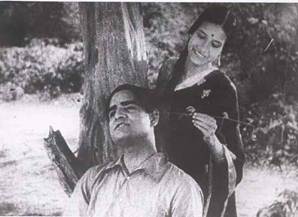
Saigal & Jamuna in 'Devdas’ (1935)
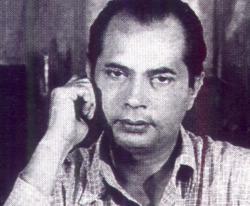
Bimal Roy the photographer-Devdas (1935)
After
listening to Saigal, he was spellbound over his mastery of expression and
enquired as to who was his ‘Ustad’ (teacher), from whom he had learnt such
singing. To this, Saigal replied that he had not learnt from any Ustad
and it was only ‘Ooperwala’ (Almighty),
who had taught him singing. At this, he blessed the maestro and gave him a
hundred rupee currency note, which Saigal kept with him till his death, as a
token of his respect to Ustad Abdul Karim Khan.
During the
course of shooting of the film, Sarat Chander Chatterjee, the author of his
classic –‘Devdas’, visited the sets. He was deeply impressed with the acting of
Saigal; though he was surprised as to how a ‘Punjabi’ could understand so
intelligently the character he had depicted in his novel in Bangla.
The
memorable features of the film ‘Devdas’ were that it was produced and directed
by P.C. Barua (who himself acted earlier in its ‘Bangla’ version) and its
photographer was Bimal Roy, who later on himself produced and directed
another version of ‘Devdas’ with Dilip Kumar. And, as a mark of respect, Bimal
Roy dedicated his film ‘Devdas’ to the memory of
Saigal and Barua.
Saigal’s
songs and acting were another notable characteristic of the film. Besides three
captivating melodies of Pahari Sanyal viz ‘Roshan hei terey dum se’, ‘Ujhardh
chukka hei jo chhota sa aashiana’ & ‘Pee ki nazaria aye hein;’ and three
enduring songs of K.C. Dey viz ’Mat
bhool musafir’, ‘Umariya beet gayee saari’ & ‘Teri maut kharhee hei’.
Additionally, there was an immortal thumri of Rajkumari (of Calcutta) –‘Nahin
aye ghanshyam’. In this rendering she (Rajkumari) was definitely not trying to
entertain anyone, but to share her own intoxication with
music- as an act of her love!
Though these
priceless melodies have been forgotten with the passage of time and generally
non-availability of these recordings to the music-lovers; but the fact remains
that Barua’s ‘Devdas’ even today is
one of the greatest musical hit
films of the
previous century.
Bimal Roy’s
film ‘Devdas’ is yet another milestone in the history of Indian cinema. The deep
understanding of the story-line and its portrayal of characters is beyond
description. And then,
presenting them on the silver screen
with a superb photographic effects with enchanting
background music
by the earthly S.D. Burman,
excellent delivery of dialogues and above all the sets and the locations shot
for the film are some of the factors which can only be
categorized as ‘par-excellence’. The dialogue-writer Rajinder Singh Bedi
was certainly at his best.
The
childhood role of Paro (Parvati) played by Baby Naaz and songs picturised on her
viz ‘Aan milo aan milo shyam sanwrey’ & ‘Saajan ki ho gayee gori’; all time
memorable role of Chunni Babu (played by
Motilal); the depth of
sorrow of Devdas conveyed in ‘Mitwaa____’ (sung by Talat Mehmmood); the sound of
alarm-watch conveying the panic expressed in a letter written and dispatched to
Paro by Devdas; the sequence depicting Paro’s emotional turbulence when she
arrives at midnight in Devdas’ bed-room; the superb depiction of the glimpses of
Chadermukhi and Paro (roles played by Vaijyantimala and Suchitra Sen) when they
cross each other in the rainy and muddy village lane; the portrayal of situation
when Devdas returns from Calcutta and calls upon at Paro’s house and lighting of
earthern lamp; the photographic catch of Devdas, when he sings ‘Kisko khabar
thee’ -shot taken through the legs of the horse of the cart (the same shot was
also taken by Bimal Roy as photographer in Saigal’s ‘Devdas’, where Saigal sang
his immortal classic thumri –‘Piya bin naahee aawat chein’). The captivating
scene of Chandermukhi when she says
wistfully ‘Ab phir kub milnaa hogaa’ and in the back-ground Mubarak Begum’s
all time great melody- ‘Wo na ayengey palat key’.
The crossing
of two trains coming from opposite directions. The blast of fire in the engine
of the passing train depicting the condition of
Devdas’ head and heart.
These
are some of the classic citations of the marvel of direction of Bimal
Roy.
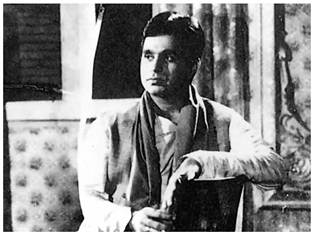
Dlip Kumar in ‘Devdas’ (1955)
The role of
Devdas played with utter ease by the genius Dilip Kumar, portraying
various aspects -- mental conflict,
dejection and love at heart -- just cannot be expressed in words. It can only be
felt and experienced. But the fact remains that he was certainly at his career
best in this film.
Above all, I
would like to draw the attention of the readers to the depiction of the last ten
minutes of the film, which needs to be written in golden letters. Devdas alights
from the train at Pandua station, leaving behind his trusted servant- Dharam Das
(role played by Nazir Hussain). He takes a bullock-cart for his last
journey to Manikpur (Paro’s village).
The
portrayal by flashback of the
significant events of his early life during the bullock-cart journey and his
eventual collapse at Paro’s doorsteps and the agony of Paro on hearing from her
step-son the contents of letters found from the pocket of the unknown body which
reveals to her the identity of the deceased as Devdas, simply stuns the mind of
the viewer watching the film. What better direction in the ambit of cinema can
one expect! And, then the classic
depiction of two birds flying before the film comes to ‘The End’.
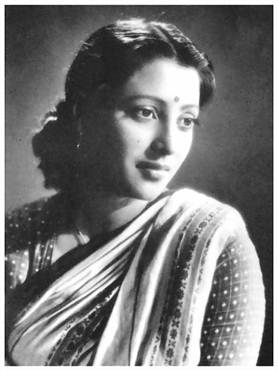

Suchitra Sen in Devdas (1955)
Aishwarya Rai in ‘Devdas’ (2002)
I
Inspired by
the grand success of these two versions of ‘Devdas’; Sanjay Leela Bhansali made
a third attempt whose unabashed opulence was in stark contrast to the austere
ambience of its predecessors. A large number of viewers went to cinema halls to
see as to how he had portrayed the legendary ‘Devdas’.
Hyperbole in the name of dialogue, lot of sound and fury signifying nothing only jarred the sensibilities of the audience. The spirit of love and its tragic culmination was smashed to smithereens by the artificial sets and high decibel dialogues which hurt our sentiments and sensibilities alike. While the story of Devdas represented the unbridgeable chasm between affluence and affection, Bhansali's film has presented before us a deep gulf between the India that was and India that now threatens to become – a surrealistic juxtaposition of the deprived and depravity.
Email:
satishchopra@rediffmail.com
-Satish
Chopra, BA/26B Ashok Vihar-I, Delhi-110052
#011-27134229/27450869
Email:
satishchopra@rediffmail.com